
Most players openings isliye nahi bhoolte kyunki memory weak hai. Problem passive method hota hai.
Use ChessFlare to organize PGNs, then train recall: PGN editor -> Opening Trainer -> spaced review.
Lines kam rakho, plans samjho, memory se move play karo, aur real games se review decide karo.
Openings blind memorize mat karo. Plans samjho, active recall train karo, spaced review use karo, real games se lines update karo.
Most players openings isliye nahi bhoolte kyunki memory weak hai. Problem passive method hota hai.
Use ChessFlare to organize PGNs, then train recall: PGN editor -> Opening Trainer -> spaced review.
Best method long move lists repeat karna nahi hai. Small repertoire banao, har branch ka plan samjho, moves ko active recall se train karo, weak lines ko jaldi review karo, aur real games me test karo.
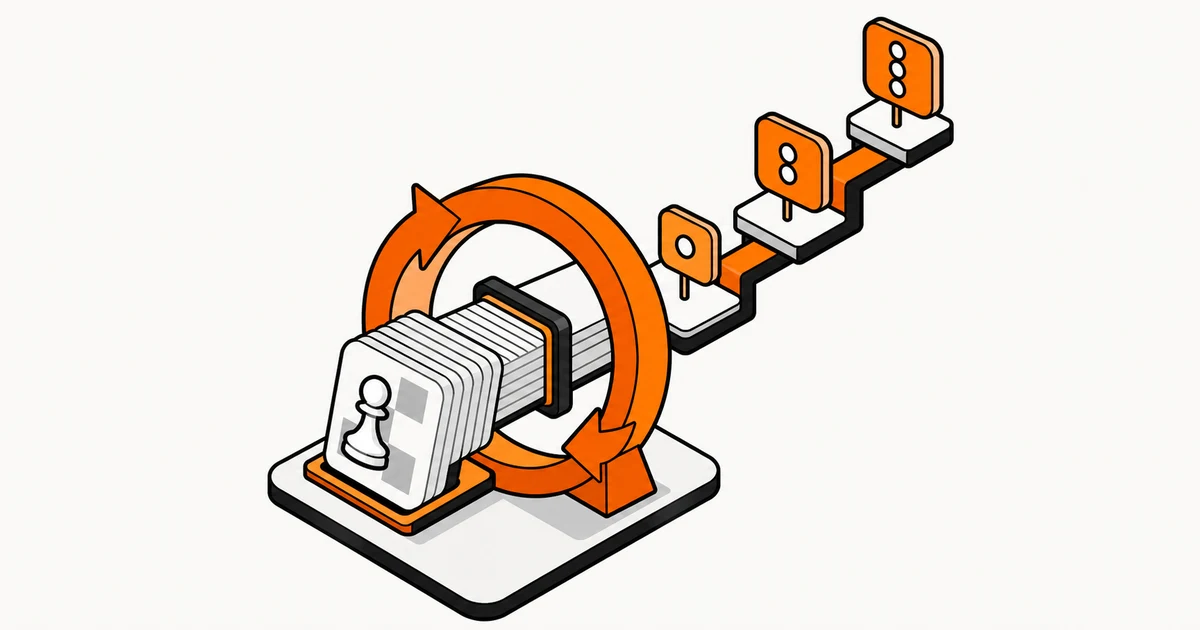
Ye loop use karo:
one practical line choose karo
plan simple words me likho
answer hide karo aur memory se move play karo
missed branches jaldi review karo
real games ke baad line update karo
ChessFlare me ye loop PGN editor, opening repertoire, Opening Trainer, spaced review, Game Summary, aur analysis ko connect karta hai.
Start with a compact repertoire. One main line and two common replies are often enough to begin.
Do not only recognize moves. Rebuild them from memory, make mistakes, then repeat the weak branches.
Random review fails. Spaced review brings hard lines back sooner and stable lines back later.
Use your games as feedback with Game Summary and analysis.
Repertoire chhota rakho, har move ko plan se connect karo, active recall train karo, spaced review use karo, aur real games se correction karo. Goal sab kuch yaad karna nahi, important lines ko playable rakhna hai.
Openings memorize karna sirf line ratna nahi hai. Position pehchanna, plan samajhna, aur answer hidden hone par move find karna important hai. Training game jaisi honi chahiye: opponent move kare, tum decide karo, feedback mile, phir weak branch repeat ho.
Line ko five times padhna familiar feel karwata hai, but familiarity recall nahi hai. Real test hai bina dekhe move nikalna. Agar move nahi nikal raha, talent problem nahi; method problem hai.
ChessFlare me organized line real practice ban jaati hai. Pehle PGN editor me material clean karo, phir Opening Trainer me decisions train karo, aur spaced review weak branches ko wapas laata rahe.
Isse tum guess nahi karte ki aaj kya revise karna hai. Hard lines jaldi aati hain, stable lines baad me. Routine short rehta hai aur pura repertoire har week reread nahi karna padta.
Game ke baad opening ko ek question se dekho: move order bhula, plan samajh nahi aaya, ya opponent ki common reply missing thi? Isi se next correction decide hota hai.
Memory issue ho to branch repeat karo. Understanding issue ho to plan note add karo. Rare line ho to simple solution save karo. Is tarah games training ko guide karti hain.
Good session long nahi hoti. Ek branch choose karo, answer hide karo, moves play karo, mistake point mark karo, aur sirf us point ko repeat karo. Phir simple language me plan note likho. Agar next day same branch fail ho, aur variations mat add karo. Explanation simplify karo jab tak move sense na kare.
Opening memory tab improve hoti hai jab session clear ho. Plan ke saath yaad ek line, ten familiar but unplayable lines se better hai.
Roz ek chhota loop rakho: due lines review karo, ek weak branch bina hint play karo, aur ek real game se note update karo. Agar routine short rahegi to tum continue karoge. Agar routine huge ho gayi to opening study phir passive reading ban jaayegi.
Practical method: compact repertoire, active recall, spaced repetition, realistic drills aur game feedback.
Start with fewer lines than you think. A compact repertoire reviewed consistently is stronger than a huge file you forget.
Yes. It is especially useful for move orders and branches that need regular recall.
Both, but plans make moves easier to remember.
Yes. Short mobile sessions work well when they focus on active recall and due reviews.
Sirf critical branches me. Mostly pehle plan yaad karo, phir active recall se move order train karo.
Bahut kam: White ke liye one setup, 1.e4 ke against one answer, 1.d4 ke against one answer, aur first decisions ke plans.