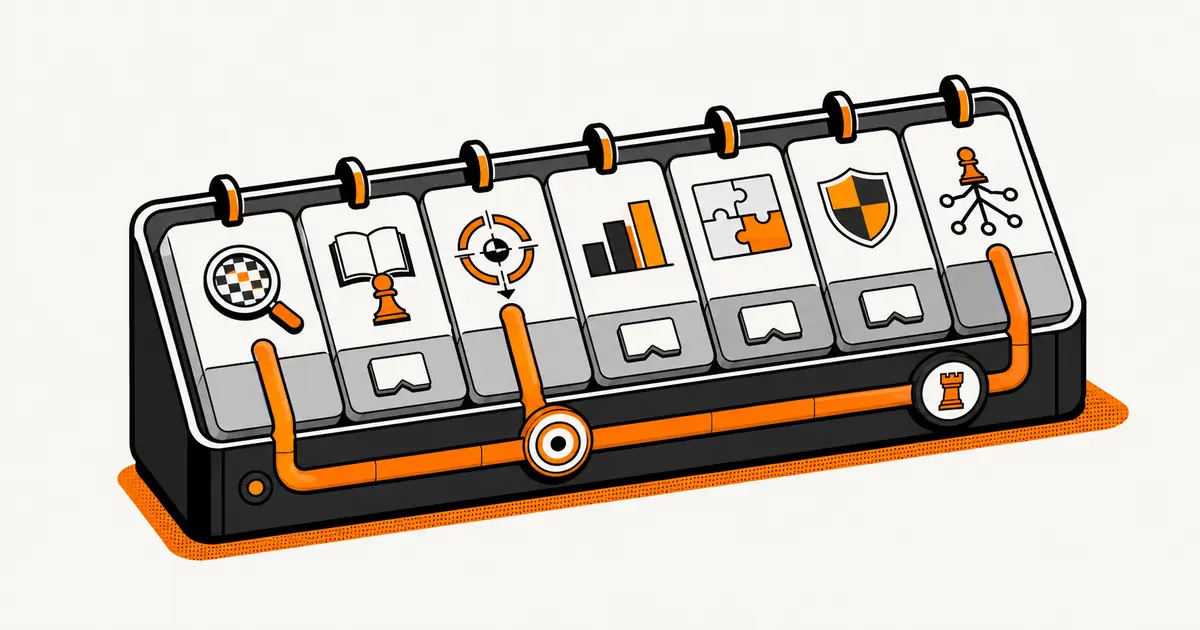
Weekly routine jo games, mistakes, openings aur weak spots ko real progress mein badalta hai.
Good chess study plan long wish list nahi hota. Har week ek repeatable loop hona chahiye: play, review, fix, repeat.
Achha chess study plan huge checklist nahi hota. Yeh repeatable loop hota hai: serious game khelo, dekho result kahan change hua, repeated weakness train karo, ek opening branch fresh rakho, phir next games mein fix test karo.
Agar aap random puzzles solve karte ho ya random videos dekhte ho, busy feel ho sakta hai par result same reh sakta hai. Strong routine apni games se connected hoti hai. ChessFlare is loop mein help karta hai: aap online khel sakte ho, real games ko Game Summary se review kar sakte ho, key positions analysis mein dekh sakte ho, decisive mistakes ko Blunder Review mein bhej sakte ho, patterns Advanced Player Stats se track kar sakte ho, aur openings ko spaced review se fresh rakh sakte ho.
Quick answer: chess study plan mein kya hona chahiye?
Practical chess study plan mein har week four blocks hone chahiye: serious games, game review, targeted tactics, aur opening maintenance. Endgames aur calculation rotate kar sakte hain, lekin core loop apni games se start hona chahiye.
Most club aur online players ke liye best week ten topics nahi hota. Better hai two ya three serious games, one honest review session, three short tactics sessions jo repeated mistakes se linked hon, aur one opening review session un lines par jo actually games mein aati hain.
Weekly routine jo kaam karti hai
Agar start point clear nahi hai, yeh routine use karo:
Do serious games khelo
Aur games se pehle dono review karo
Ek repeated mistake pattern choose karo
Us pattern ko short sessions mein train karo
Game mein aayi opening branch review karo
Week end par ek test game khelo
Yeh routine study ko direction deti hai. Games agenda banati hain. Review next pattern decide karta hai. Opening work real positions ke paas rehta hai.
Kitna time dena chahiye?
Agar aapke paas week mein three hours hain, aise split karo:
Block
Time
Goal
Serious games
60 minutes
Real learning positions banana
Game review
45 minutes
Result-changing mistakes dhoondhna
Targeted tactics
45 minutes
Repeated pattern fix karna
Opening review
30 minutes
Ek playable branch ready rakhna
Agar time zyada hai, sirf puzzles add mat karo. Review better karo. Bahut players ke paas enough material hota hai, par woh apni games se enough nahi nikalte.
Random training kyun fail hoti hai
Random training productive lagti hai kyunki har session new hota hai. Par rating yeh nahi dekhti ki aapne kitna material touch kiya. Rating dekhti hai ki aap same mistakes games mein repeat karna band kar rahe ho ya nahi.
Agar aap pinned pieces lose karte ho, pehle huge tactic diet nahi chahiye. Pin ko piece girne se pehle recognize karna chahiye. Agar opening se bad position milti hai, five new openings nahi chahiye. Woh branch samajhni hai jo baar-baar aati hai.
Isliye ChessFlare ka useful workflow hai: real game, summary, analysis, blunder review, stats, weak spot training, phir opening ya study review.
1000 Elo se neeche: blunder checks, hanging pieces, basic tactics, simple endgames. Openings small aur playable rakho.
1000 se 1400: structured review add karo. Aapko pata hona chahiye kaunsi mistakes repeat hoti hain: missed threats, weak king, rushed captures, opening exits, ya winning positions convert na karna.
1400 se 1800: calculation, cleaner opening branches, aur deeper game review add karo. Tactics important hain, par positions aapki games jaisi honi chahiye.
1800 ke upar: study personal hoti hai. Opening depth, calculation discipline, endgame technique aur opponent prep zyada matter karte hain. Loop same rehta hai: game evidence first, training second.
Openings ko plan se kaise connect karein
Opening study separate hobby nahi honi chahiye. Jab koi branch game mein aaye, usse review karo, note add karo, aur critical moves active recall se train karo.
ChessFlare mein aap PGN lines create ya import kar sakte ho, branches organize kar sakte ho, Opening Trainer se train kar sakte ho, aur spaced review se fragile lines jaldi wapas dekh sakte ho.
Game review time waste kiye bina kaise karein
Har move ko equally review mat karo. Teen questions se start karo:
Practical result kahan change hua?
Mistake tactical, strategic, opening, endgame, ya time-pressure related thi?
Kaunsi small training task is mistake ko next week less likely banayegi?
Engine best move dikha sakta hai. Study plan ko yeh explain karna chahiye ki aapne woh move kyun miss kiya.
Simple seven-day plan
Monday: ek serious game aur quick notes.
Tuesday: game review aur one mistake tag.
Wednesday: short targeted tactics session.
Thursday: opening branch review.
Friday: second serious game.
Saturday: deeper review aur blunder review.
Sunday: light spaced review aur short test session.
Exact days important nahi. Order important hai: play, review, train, repeat.
Evidence se plan banao
Chess study plan ambition se nahi, proof se start hona chahiye. Extra hours add karne se pehle last ten serious games dekho aur losses simple language me likho: missed tactic, bad opening plan, time trouble, weak king, lost ending, failed conversion. Pattern mood se zyada important hai.
Isse common mistake avoid hoti hai: grandmaster-style schedule copy karna jisme openings, endgames, strategy, calculation, books, videos aur engine sab weekly ho. Plan impressive dikhta hai, par jaldi die ho jata hai. Useful plan small hota hai aur escape karna difficult hota hai. Woh few weaknesses name karta hai aur har weakness ko repeatable slot deta hai.
30, 60, 90 minute version
30 minutes hain to narrow loop: ten minutes tactics, ten minutes recent mistake review, ten minutes opening ya endgame repeat. Video tabhi add karo jab koi task replace ho.
60 minutes hain to one serious game segment play/review karo, phir appeared theme train karo: calculation mistake, defensive tactic, isolated pawn plan, rook ending, forgotten opening branch.
90 minutes hain to deep block add karo. Engine ke bina first analyze karo, game ke time thoughts likho, phir engine check karo aur sirf useful correction save karo. Goal beautiful lines collect karna nahi. Goal tomorrow ka drill banana hai.
Rating ke saath kya change hota hai
Under 1000 plan brutal practical: fewer hanging pieces, one-move threats, basic mates, openings jo material lose karti hain unse bachna. Short tactics repetition deep theory se better hai.
1000 to 1600 me tactics ko review se connect karo. Kaunse motifs repeat hote hain aur kaunsi opening structures unhe produce karti hain, yeh know karna hai. Basic endings aur simple repertoire add karo, but calculation aur game review main time rakho.
Above 1600 plan diagnostic hota hai. Issue calculation, decision, structure, time use, preparation ya conversion ho sakta hai. Study ka meaning more content nahi; sharper feedback hai.
Tournament week vs normal week
Normal week broad skills banati hai. Tournament week noise reduce karti hai. Main openings review karo, known tactical weak spots repeat karo, common endgames check karo, aur new theory add karne se pehle sleep protect karo.
Tournament ke baad opposite: evidence collect karo. Kaunsi losses preparation thi? Kaunsi tactical misses? Kaunsi emotion ya clock problem? Yeh review next study plan banata hai.
Ek loop se start karo
Is week ek ChessFlare loop use karo: serious game khelo, summary kholo, decisive mistake review karo, weak spot train karo, aur opening branch review karo jo game mein aayi.
Itna scattered study ko system mein badalne ke liye enough hai.