How to use ChessFlare without turning it into another chess notebook
Start with one loop: import games or PGN, review the critical moment, train the weak branch, and repeat.
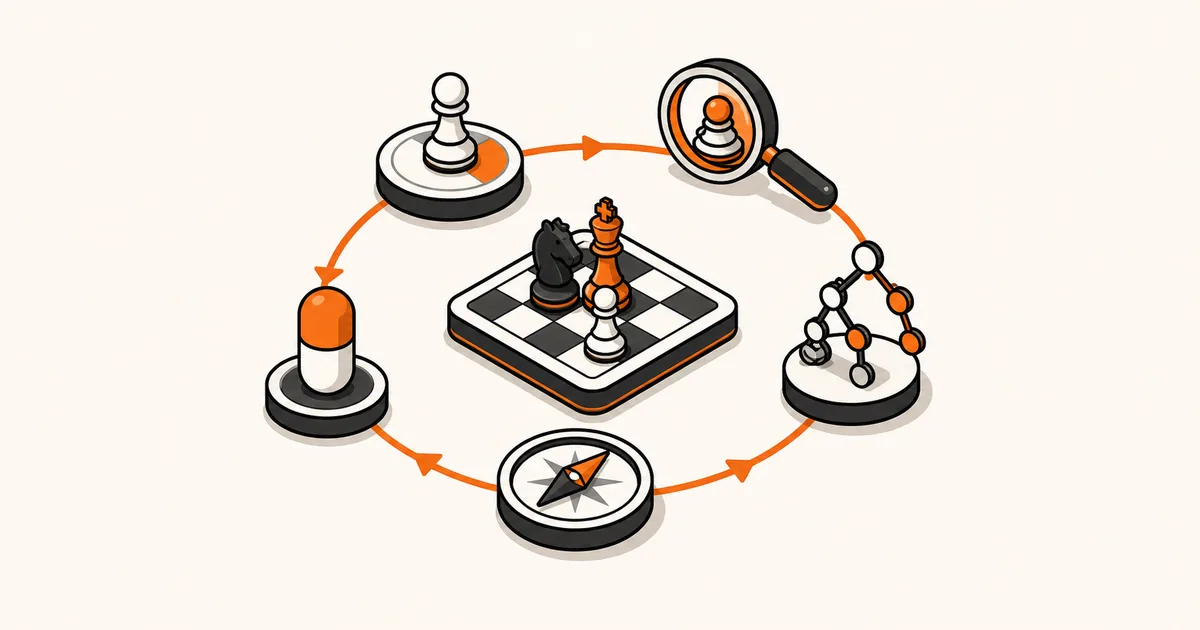
The best way to use ChessFlare is not to add every game, every PGN, and every opening line on day one. Start with one repeatable loop: bring in a real game or focused PGN, find one important mistake, turn it into a training task, then review it again later.
open the critical position and test candidate moves
decide whether the mistake was opening, tactic, plan, endgame, or time pressure
create one training action
repeat the action on mobile or during a short review session
This is intentionally small. A product becomes useful when it changes your next session, not when it stores more material.
Step 1: start from your real games
Your own games are the fastest source of useful training. They show what you actually miss under pressure, not what a course assumes you might miss.
Begin with a recent rapid, blitz, or classical game. Use Game Summary to understand the flow before drilling into variations. Then move to Blunder Review if the game had a clear tactical or strategic collapse.
The goal is not to punish every mistake. The goal is to identify the mistake with the highest training value.
Step 2: analyze one position deeply
After the summary, choose one position. Open it in analysis and write your candidate moves before checking the engine. This keeps analysis active.
Ask:
what was I trying to achieve?
what did I miss tactically?
what plan did the engine move support?
is this a one-off mistake or a recurring pattern?
does this position belong in my opening repertoire, tactical review, or endgame study?
If the answer is unclear, save the position as study material instead of forcing a conclusion.
Start one loop
Connect real games, PGN work, opening training, and review.
Use desktop for structure and mobile for short daily sessions.
Let mistakes decide the next drill instead of guessing what to study.
Do not create a giant opening database first. Pick one line you play often and clean it up with the PGN Editor. Add only the branches you expect to face, then use the chess opening tree mindset: main line, common replies, plans, and dangerous sidelines.
Once the structure is readable, train the line with Opening Trainer. The point is active recall. You should be asked to find the move, not just read it.
Step 4: review instead of relearning
Opening work fails when the same line is relearned from zero every few weeks. ChessFlare is positioned around review and spaced repetition so mastered lines can appear later while hard lines return sooner.
Use review for small daily sessions. A useful session can be one weak branch, one blunder pattern, or one position from yesterday's game. The question is always the same: what should I be less likely to miss next time?
Step 5: use mobile for short sessions
Desktop is better for building structure. Mobile is better for keeping the habit alive. Use desktop to import PGN, organize chapters, inspect a complex line, or write notes. Use mobile to review a branch, check a game summary, or repeat a short training set.
This split prevents the common problem where chess study only happens when you have a long desk session available.
Weekly workflow
Try this simple weekly rhythm:
after each serious game, review one key moment
twice per week, update one opening branch
daily or near daily, clear a short review queue
once per week, inspect stats for recurring leaks
when one pattern repeats, turn it into targeted training
The routine is small enough to continue, but structured enough to compound.
Common setup mistakes
The first mistake is importing too much material. More lines do not create better recall if the structure is unreadable.
The second mistake is reviewing without creating an action. A note that says "missed tactic" is weak. A saved pattern or drill is stronger.
The third mistake is separating tools. If game review, PGN, opening training, and mobile practice live in different places, the follow-up action is easy to skip.
The fourth mistake is chasing every engine detail. You need the lesson that changes future decisions.
Use ChessFlare as a loop, not a storage box. Bring in real games, understand the critical moment, update your repertoire or training queue, then review the lesson again. That is how analysis becomes progress.
How to use ChessFlare FAQ
The fastest way to turn ChessFlare into a simple weekly routine.
What should I do first in ChessFlare?
Start with one real workflow: sync or import a game, review the critical moment, then save one training action.
Should I build a huge repertoire immediately?
No. Begin with one opening branch you actually play, then expand after the review loop is working.
Can I use ChessFlare on mobile?
Yes. ChessFlare is positioned around desktop and mobile continuity so short review sessions can fit daily routines.
How often should I review?
A short routine after games and a small daily review queue usually beats one large unfocused session.