Game analysis

Chess Game Analyzer: analyze games and train the fix

Do not stop at engine lines. Find the turning point, name the mistake, and convert one game into one training action.

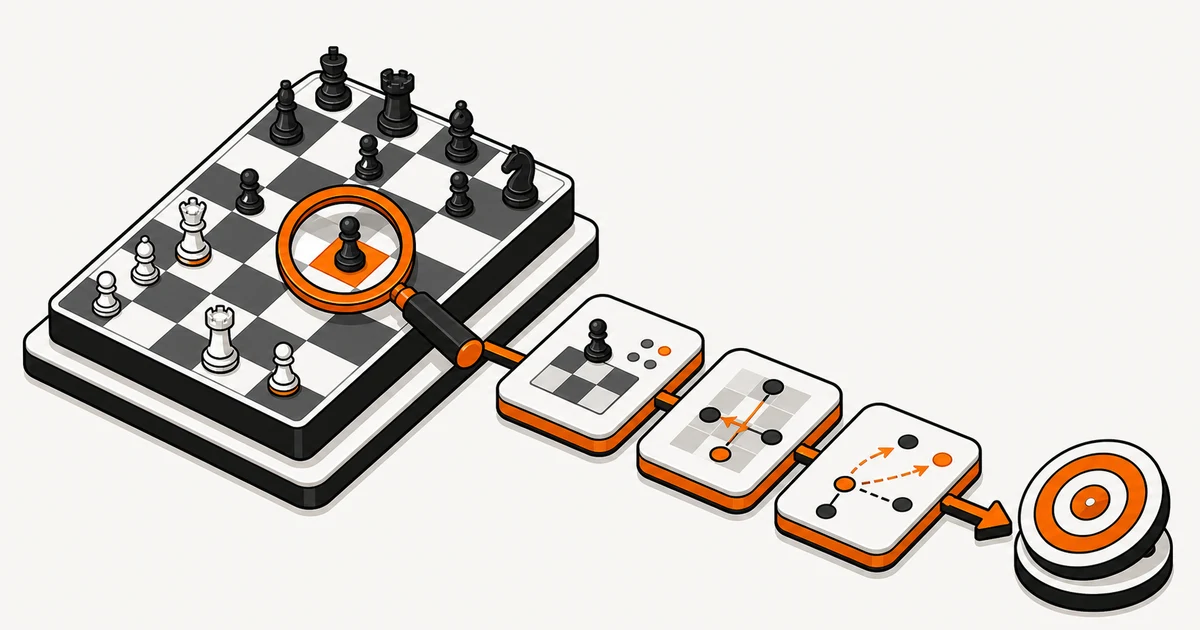
Pseudo-isometric chess game analyzer workflow thumbnail

A useful chess game analyzer does not only grade moves. It should show what changed the result, why it happened, and what to train next.

A chess game analyzer should do more than show Stockfish lines, accuracy, and blunder labels. The real value is the next step: what changed the result, why the mistake happened, and what you should train before the next game.

Most tools can analyze a Chess.com game, Lichess game, or PGN and produce a report. ChessFlare is strongest when that report becomes a workflow: Game Summary for the story, Blunder Review for critical mistakes, analysis for candidate moves, Weak Spot Puzzle for patterns, and opening review when a branch fails.

Analyze a game with ChessFlare

Quick answer

Use a chess game analyzer when you want a fast review of a full game: evaluation swings, missed tactics, blunders, opening mistakes, and turning points. Use ChessFlare when you want the analysis to end with a training action instead of another forgotten report.

The best analysis workflow is:

  1. import or sync the game

  2. identify the turning point

  3. inspect one or two critical positions

  4. name the mistake in human language

  5. create one training task

What a good chess game analyzer should show

A useful report should make the game easier to understand, not just noisier. Look for:

  • move quality or blunder markers
  • evaluation graph or turning points
  • best move suggestions
  • opening identification
  • PGN import or game sync
  • human-readable explanation
  • a way to save the lesson
  • connection to puzzles, repertoire, or review

If a tool only shows a long engine line, you still have to translate the lesson yourself.

Analyzer, review, or analysis board?

These jobs overlap, but they are not the same.

Job Best use Output
Game analyzer Review the full game quickly Report, blunders, accuracy, turning points
Analysis board Explore one position deeply Candidate moves, engine lines, variations
Game review workflow Decide what to train next One repeatable correction

Use all three when the game matters. Review finds the moment, the board explains it, and the workflow turns it into practice.

Analyze the game, train the fix

  • Start from Chess.com, Lichess, or PGN games
  • Find turning points and recurring patterns
  • Send the lesson into review, openings, or weak spots
Analyze a game

Do not analyze every move equally

Most games are decided by a few key moments. Start with the largest evaluation swing, the move where the plan changed, or the point where you left your opening preparation.

Then ask why the move failed:

  • missed tactic
  • loose piece
  • king safety
  • bad trade
  • opening memory
  • calculation shortcut
  • time pressure
  • endgame technique

This language matters. โ€œBlunderโ€ is too vague. โ€œI removed my defender before checking the back rankโ€ can become training.

How ChessFlare turns analysis into training

ChessFlare connects the post-game loop:

  1. sync or import the game

  2. read the Game Summary

  3. inspect critical positions with analysis

  4. isolate decisive errors with Blunder Review

  5. track recurring patterns with Advanced Player Stats

  6. train tactical leaks with Weak Spot Puzzle

  7. update opening branches in the Opening Trainer

That is the difference between seeing a better move once and changing the next game.

A 15-minute review routine

Use five minutes to replay the game and mark emotional moments: โ€œI was unsure here,โ€ โ€œI rushed here,โ€ โ€œI thought this tactic worked.โ€

Use five minutes to compare those moments with the analyzer. Find the real turning point.

Use five minutes to create one action. Add a repertoire note, save a position, train a tactic theme, or review an endgame idea.

One clear action is better than ten vague lessons.

Common mistakes

The first mistake is opening the engine before remembering your thought process. You lose the chance to compare what you saw with what was real.

The second mistake is trusting accuracy as the whole story. Accuracy is a signal, not a study plan.

The third mistake is reviewing only losses. Wins can hide habits that stronger opponents will punish.

The fourth mistake is collecting reports without building drills. Analysis should change practice.

Related workflows

If you want a free report-first flow, compare the free chess game review app. If you need to inspect one position, use the free chess analysis board. If the mistake came from an opening branch, connect it to a chess opening tree and the chess repertoire builder. If the issue is tactical, use the chess tactics trainer.

Final verdict

A chess game analyzer is useful only if it helps you do something after the report. Find the turning point, understand the human reason, decide whether it is a pattern, and train one correction.

That is where ChessFlare fits: game review, analysis, stats, weak spots, openings, and review in one improvement loop.
Turn your next game into training

Chess game analyzer FAQ

Fast answers about game reports, Stockfish analysis, review, and training follow-up.

What is a chess game analyzer?

It is a tool that reviews a full chess game, finds blunders or turning points, and usually shows engine suggestions, accuracy, and move grades.

Can I analyze Chess.com or Lichess games?

Yes. Many analyzers use Chess.com usernames, Lichess games, or PGN import. ChessFlare also positions real games as the start of a review workflow.

Is a chess game analyzer the same as an analysis board?

No. A game analyzer reviews the whole game. An analysis board is better for exploring one position and candidate moves deeply.

Should I analyze every game?

No. Analyze games with useful decisions. One focused review with one training action is better than many shallow reports.

What should I do after finding a blunder?

Name the reason behind it, check if it is recurring, then turn it into a tactic drill, repertoire note, saved position, or review task.

How does ChessFlare help after analysis?

ChessFlare connects game summary, blunder review, analysis, player stats, weak spot puzzles, opening review, and spaced practice.